 how-to
How to Style Balinese Furniture Indoors: A Practical Guide
Table of Contents
- What You'll Need Before Starting
- Understanding Balinese Interior Design Principles
- Step 1: Choose Your Foundation Colours and Light Palette
- Step 2: Select and Position Balinese Teak Furniture as Anchor Pieces
- Step 3: Layer Natural Materials and Textiles
- Step 4: Add Greenery and Indoor Plants
- Styling a Bali Style Living Room
- How to Mix Traditional and Modern Furniture
- Frequently Asked Questions
Last Updated: October 10, 2026
What You'll Need Before Starting
Before bringing style balinese furniture into your home, embrace natural materials and handcrafted imperfection. Unlike mass-produced furniture, each piece has unique character.
Measure your rooms, note natural light entry points, and decide whether to start fresh or blend Balinese pieces with existing furniture.
Plan your budget and timeline carefully, sourcing authentic pieces takes time. At Zenteak, we offer sustainable, handcrafted pieces designed to build spaces that last.
Learn about natural material care upfront, teak, bamboo, stone, and rattan each require different maintenance approaches.
Understanding Balinese Interior Design Principles
Balinese interior design creates calm through harmony between humans and nature, not by filling rooms with clutter.
The core principles are straightforward:
- Simplicity with purpose. Every piece should earn its place. Clutter breaks the serene atmosphere.
- Natural materials first. Wood, stone, bamboo, rattan, these are the foundation. They age beautifully and connect you to nature.
- Neutral colour palettes. Soft whites, warm beiges, natural wood tones. These colours recede and let textures shine.
- Layered textures. Smooth stone next to rough rattan. Polished teak next to woven panels. The contrast creates visual interest without noise.
- Indoor-outdoor flow. Balinese design blurs boundaries. Bring plants inside. Use open shelving. Create sight lines through your space.
- Respect for craftsmanship. Hand-carved details, visible joinery, traditional techniques, these are celebrated, not hidden.
The result feels like a resort sanctuary, a space where you want to sit, breathe, and be present.
Step 1: Choose Your Foundation Colours and Light Palette
Your colour palette is foundational. Get it right and everything else falls into place; get it wrong and beautiful furniture feels jarring.
Start with neutrals: soft whites, warm creams, natural beige, and muted taupe. These create a calm backdrop, let materials shine, and enlarge small spaces.
Understanding wood tone interaction with light
Light honey teak, warm caramel, and soft grey-brown tones behave differently depending on your room's light exposure.
- Rooms with abundant natural light (north or east-facing windows): Light honey teak and warm caramel woods shine. Pair with soft whites or pale cream walls (off-white rather than pure white). Avoid cool-grey neutrals; they clash with warm wood.
- Rooms with moderate light (south-facing or mixed exposure): Medium-toned teak pairs with warm beige or soft taupe walls, forgiving across different times of day.
- Rooms with limited natural light (north-facing or interior rooms): Use pale honey teak or weathered grey-toned wood paired with light creams or soft whites. Avoid dark wood; it absorbs light and feels cave-like.
Testing colours in context
Test wall colours against actual wood samples in your room. Paint a large swatch (60cm+) and observe it for 3-5 days at different times, early morning, midday, late afternoon, and evening. Colours shift dramatically.
Wood tone consistency within a room
Pick one wood-tone direction and stick with it. If mixing warm and cool tones deliberately (e.g., light daybed with dark side tables), connect them with textiles or plants to make the mix feel intentional.
Accent colours: restraint is essential
Introduce accent colours sparingly. Soft sage green, dusty terracotta, or muted charcoal work well in Balinese interiors. Use these in textiles, plants, or a single statement piece. One accent colour is better than three.
Practical colour-matching checklist
- Identify your room's light exposure.
- Test wall colours against wood samples at different times of day.
- Choose one wood-tone family and stick to it.
- Select one accent colour maximum, introduced through textiles or plants.
- Assess after 3-5 days for calm, cohesive feel.
Step 2: Select and Position Balinese Teak Furniture as Anchor Pieces
Anchor pieces set the room's tone. These are typically larger items, a daybed, low wooden table, or storage unit. Choose them first, then build around them.
Teak is the gold standard. It's durable and improves with age. Teak weathers to soft silver-grey untreated, or maintain its warm honey tone with occasional oil, both approaches are valid.
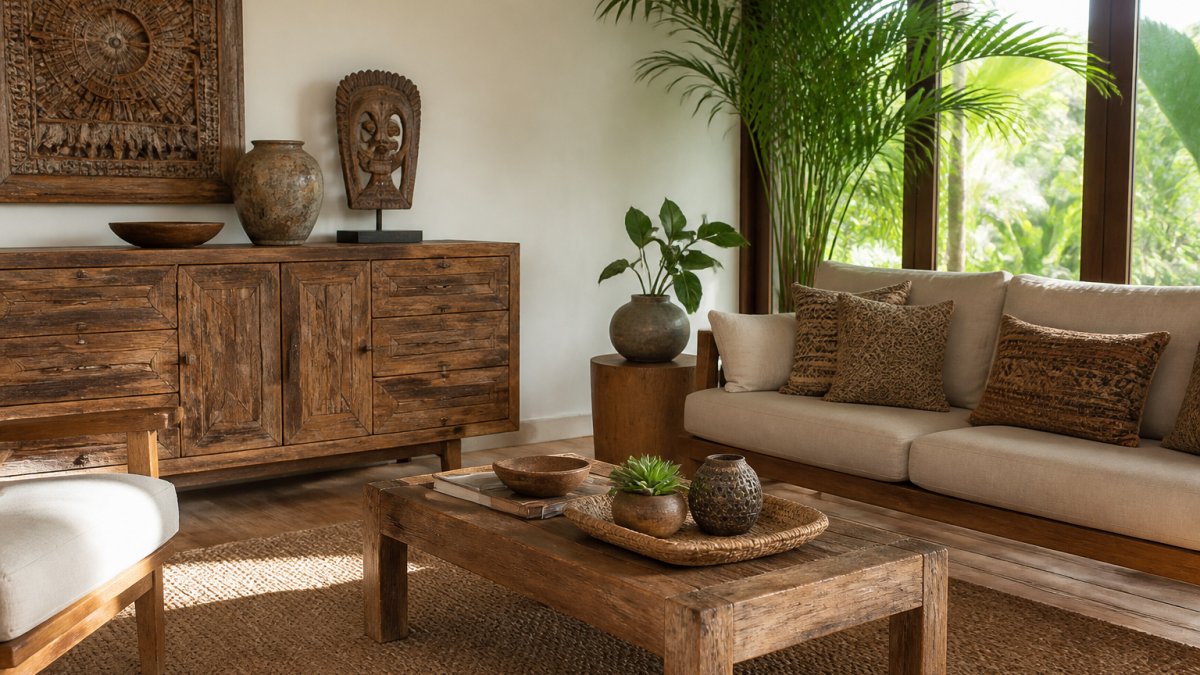
Look for pieces with visible craftsmanship. Hand-carved details, exposed joinery, and natural wood variations are features, not flaws. They signal authenticity and quality.
Dark versus light wood tones
This choice matters more than people realise. It affects the entire mood of your space.
Light wood tones (honey, cream, natural teak) create an open, airy feeling. They reflect light and make spaces feel larger. They pair beautifully with soft whites and creams. Light wood works especially well in smaller rooms or spaces with limited natural light.
Dark wood tones (deep brown, charcoal-stained teak, ebony) create drama and intimacy. They ground a space and add sophistication. They work best in larger rooms with good natural light. Dark wood pairs well with deeper neutral accents and richer textiles.
Pick one direction. Mixing light and dark woods in the same room usually feels confused unless you're doing it as a deliberate contrast, say, a light wood daybed with dark wood side tables. Even then, connect them with textiles or plants to make the mix feel intentional.
Furniture scale and spacing in your room
This is where most people go wrong. They buy beautiful pieces and then cram too many into the space.
Measure your room. Sketch it out, even roughly. Note doorways, windows, and traffic flow. Your furniture should create a natural path through the space.
Leave breathing room. A daybed needs clear space around it. A low table should have seating or standing room on all sides. Walls shouldn't be lined with furniture. Open space is part of the design.
Match scale to your room. A massive wooden platform bed in a small bedroom overwhelms the space. A tiny side table in a large living room disappears. Think proportionally.
Use the rule of thirds. Divide your room into thirds visually. Place your main anchor piece in one third. This creates better balance than centring everything.
Space furniture 60-90 centimetres apart for comfortable movement. If you're creating a seating area, keep pieces close enough for conversation, roughly 1.2-1.5 metres between seat edges.
Step 3: Layer Natural Materials and Textiles
Natural materials are what make Balinese design feel alive. Each material brings its own character.
Stone accents ground a space. A stone side table, a carved stone planter, or stone flooring adds weight and permanence. Stone feels cool and solid, it balances the warmth of wood.
Bamboo brings lightness and movement. Bamboo poles, screens, or woven panels create texture without bulk. Bamboo also suggests flexibility and growth in Balinese philosophy.
Rattan and wicker add softness and organic curves. A rattan chair, woven baskets, or rattan pendant lights introduce rhythm. These materials age gracefully and develop patina.
Woven textiles are essential. Natural-fibre cushions, throws, and wall hangings add comfort and colour. Look for hand-woven fabrics in cotton, linen, or jute. Imperfect weaves are more authentic than perfectly uniform fabrics.
Layer these materials intentionally. Don't use all of them in one small space, you'll create visual chaos. In a living room, you might use teak furniture, stone accents, rattan lighting, and woven cushions. In a bedroom, focus on teak, natural textiles, and perhaps one bamboo element.
The goal is textural variety without overwhelming the senses.
Step 4: Add Greenery and Indoor Plants
Plants are non-negotiable in Balinese design. They're not decoration, they're essential to the whole concept.
Plants as functional elements, not just aesthetics
Plants increase humidity. In drier climates or heated spaces, natural materials can crack, warp, or become brittle. Grouping plants strategically can help maintain moisture levels.
Choosing plants for your climate and light conditions
Choose plants that thrive indoors in your climate. Consider light levels in each room carefully.
- Bright, indirect light (near windows but not in direct sun): Monstera, fiddle leaf fig, bird of paradise, and rubber plants thrive here. These large-leafed plants create visual impact and are forgiving of occasional neglect.
- Moderate light (a few metres from a window, or filtered through sheer curtains): Pothos, philodendron, snake plant, and peace lily work well. These are hardy and tolerant of variable conditions.
- Low light (interior rooms, away from windows): Shade-tolerant plants include ZZ plant, cast-iron plant, and Chinese evergreen. These are slower-growing but reliable.
Plant placement to protect furniture and materials
Keep large-leafed plants at least 30cm from wooden furniture to prevent water splash and damage. Avoid hanging trailing plants directly over teak or bamboo.
Natural pots and drainage
Use terracotta, woven baskets, or concrete planters. Ensure every pot has drainage holes and sits on a saucer, water on wooden surfaces causes staining and rot.
Watering and humidity management
Water when soil feels dry 2-3cm down; overwatering is the most common mistake (Watering Plants Wisely). In dry climates, mist plants 2-3 times weekly to increase humidity around furniture and remove dust.
Seasonal adjustments
Reduce watering 20-30% in cooler months; increase in warmer months. Rotate large plants every 2-3 weeks for even growth.
A well-placed plant cluster is both beautiful and functional, integral to your design's longevity.
Styling a Bali Style Living Room
Your living room is where Balinese style truly shines. This is your sanctuary, make it count.
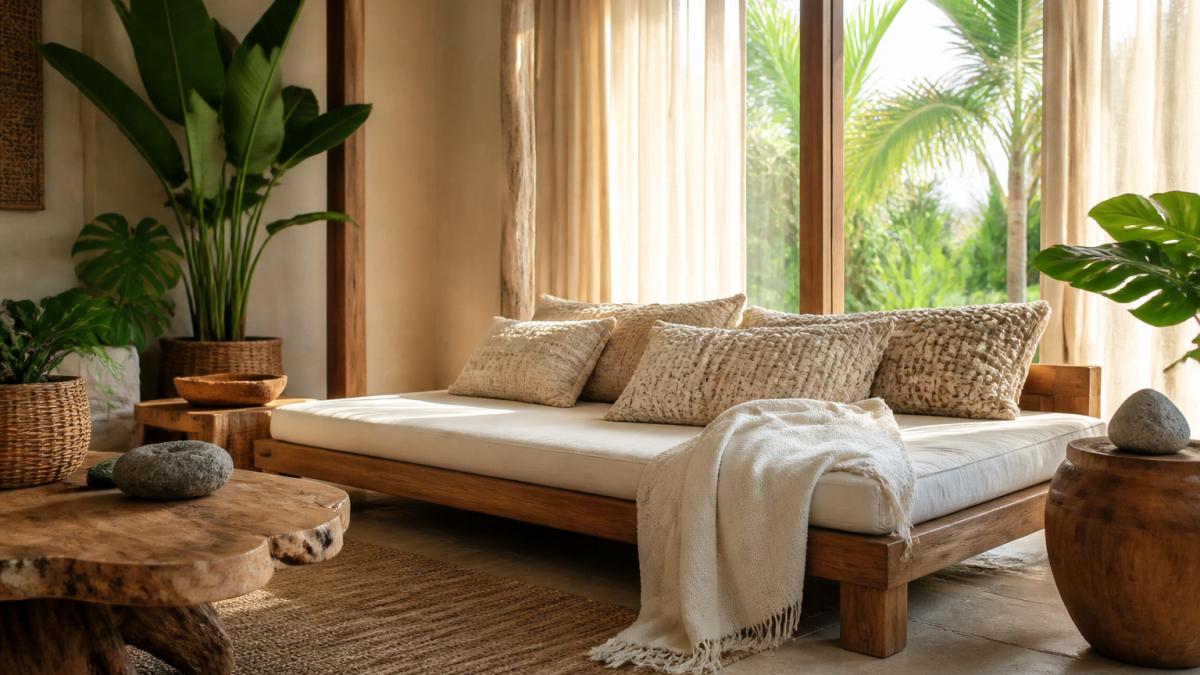
Start with a low wooden platform or daybed as your anchor, a classic piece of style balinese furniture. Position it to face the room, not the television. If you must have a TV, hide it behind a wooden screen or keep it small and unobtrusive. The focus should be on relaxation and presence, not screens.
Add a low wooden coffee table with clean lines and natural finish. Layer seating with woven cushions and natural-fibre throws, mixing textures while keeping colours cohesive. Position plants strategically, a large plant in one corner, smaller plants grouped on shelves. Add rattan pendant lighting or woven lamps for soft, warm light; consider dimmer switches.
How to Mix Traditional and Modern Furniture
You don't need to go all-in on Balinese style. Many people want to blend traditional pieces with modern furniture.
Start with one anchor piece. A Balinese daybed or wooden table becomes your statement. Build around it with modern furniture in neutral tones.
Keep colour palettes aligned. Modern furniture in whites, greys, and natural wood tones complements Balinese pieces. Bright colours or bold patterns clash.
Use natural materials as the bridge. Modern furniture in wood, linen, or leather connects to Balinese aesthetics. Plastic or synthetic materials feel out of place.
Mix textures intentionally. A modern sofa in natural linen pairs well with a carved wooden side table.
Let Balinese pieces be the focus. If you're mixing styles, make traditional pieces the stars. Modern furniture should support them, not compete.
Avoid visual clutter. This is more important when mixing styles. Each piece needs space. Negative space becomes your design tool.
The key is restraint. Don't try to blend too many styles in one small space.
Our pieces are designed to work as statements or as accents in modern spaces.
Frequently Asked Questions
What colours work best with Balinese furniture?
Soft whites, muted beiges, warm creams, and pale greys create the ideal backdrop for Balinese furniture. These neutral tones let handcrafted wood details and carved elements stand out whilst maintaining the serene, resort-inspired atmosphere Balinese design is known for. Avoid bold or saturated colours, which can overwhelm the natural beauty of teak and bamboo pieces.
How do you style Balinese furniture indoors without making it feel cluttered?
Prioritise negative space and balance layered textures carefully. Choose 2-3 statement pieces like a teak daybed or carved wooden cabinet, then layer woven textiles, plants, and stone accents around them. Ensure furniture is properly spaced, typically 60-90 centimetres between seating pieces, and resist the urge to fill every corner. Quality and breathing room matter more than quantity.
Can Balinese furniture work in a small room?
Yes, with thoughtful placement. Select multifunctional pieces like low-profile teak benches or daybeds that do double duty as seating and storage. Use vertical space with tall bamboo poles or wall-mounted woven panels to draw the eye upward. Keep the colour palette light and minimal to avoid cramping the space, and choose one or two focal pieces rather than many small items.
How do you mix Balinese furniture with contemporary decor?
Let Balinese pieces anchor the room, then introduce modern elements through lighting, simple geometric textiles, or minimalist artwork. Pair carved teak furniture with sleek metal or glass accents, and blend natural stone with polished concrete or tile. The key is respecting the handcrafted, organic nature of Balinese pieces whilst adding clean lines and modern functionality that complement rather than compete.
Creating a Balinese-inspired home is about more than aesthetics. It's about building a space that supports calm, presence, and connection to natural materials. Whether you're styling a single room or your entire home, start with one anchor piece and build thoughtfully. Invest in quality over quantity. Let natural materials age and develop character. The result will be a sanctuary that feels both timeless and uniquely yours.